Showing posts with label liff in Cascadia. Show all posts

25 May 2021

This Is How Chill We Are In The Pacific Northwest

3901

The Pacific Northwest has a reputation for being chill AF. Even our Type "A"s are more like Type "B-pluses". The only thing that really keeps us from being mistaken for Canadian provinces is it's too obvious oftimes that "Northwest Nice" is thinly-veiled passive-agression.

But we are pretty chill, overall. Prove it? How chill exactly?

Well, dig, if you will, this picture.


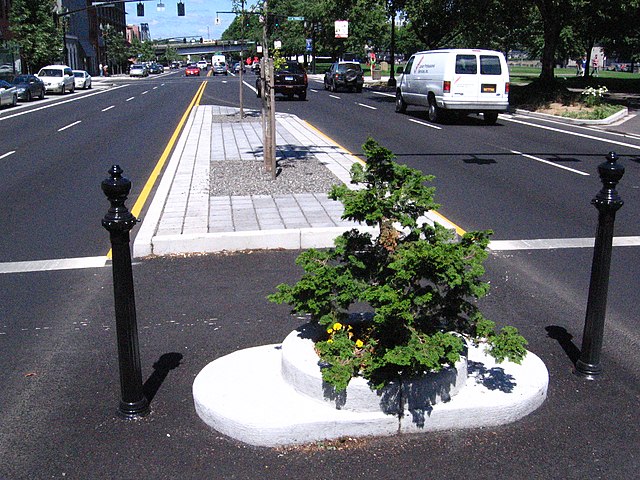
Not so much of the maryjane quickshop, of which there seem mysteriously to be more than there are even of people partaking and multiplying by the day. This is on NE 99th Avenue in Parkrose, and it's not so much the shop by what you can see beyond the beyond that black iron fence.

Those are grave monuments. That there's a necropolis, my frens, a city of the dead. A cemetery. And some of us PNWers just swan on over to the pot shop and buy an ounce or an eighth or a lid or a potholder or whatever they're calling 'em these days, and cast a glance at a cemetery next door and it's like no big deal.

If that isn't max chill, I don't know what is.

07 June 2020

Our Primary Election Ballots Are Counted At Last

3687It's been a long wait ... a bit too long. I had faith but that faith was being tested.

Covid-19 has caused wholesale changes in everything, and if you doubt that, understand this: our household's ballots were dropped in the drop box out front of the Mighty Midland Brand Library two days before the election day. This is usually more than enough time to have them logged in as recieved before or the day of the election. Usually. This time, not only had election day come and gone but the weekend after that and Multnomah Ballottrax had not recieved word that our ballots had even been accepted. 

Multnomah County Elections are solid. What it caused was for everything to slow down because of the necessity of new regimes of social distancing at work. Wouldn't do at all to have someone come down with Covid just for working the election.

But, today, I checked Ballottrax, and found this:


11 November 2017

[liff in Cascadia] BV-Radio.com: Cascadia's Favorite Music

3518.
There is a website devoted to Pacific Northwest local music; powered by Burgerville, it's called BV-Radio.com.

Right now it's devoted solely to playing music by Pacfic Northwestern artists. It has just two things to do, which is refreshingly simple; click the play button to start the stream, and a form to send feedback. There's also a bit of verbiage:
Welcome to BV-Radio.com, a new conversation about what makes this region-the beautiful, dynamic, Pacific Northwest-the unique place it is.
We have a goal to connect the people of the Northwest with each other and explore what makes this community so resilient, what restores us, what grounds us in our home. We are starting through music, and expanding from there…art, agriculture, food, architecture, design…wherever you and the story leads us.
We’ve created a platform for some of the region’s recording artists. Listen along. You’ll hear songs you recognize and songs you don’t. You’ll hear new music and classics from way back. But everything you hear has a connection to this region and the people who live here.
This is your home. It should sound like it. Join the conversation and we’ll make sure your voice-and your music-gets heard.
I've included the entire text because it provides a picture of an interesting ambition. Burgerville is the quintessential Northwest burger place, and no other place that I've experienced so far has managed to translate the PNW 'foodie' tropes of local sourcing, terrior, and seasonal availability so effectively to the crowd who isn't going to go out to the fashionable places. Lunching BV regularly is a relatively cheap way to sophisticate the palate.

As such, BV has developed a certain essential local POV as a now-indelible part of its brand. You can get burgers and fries that will sastisfy, and those you will like, in other chains, but none as PNW as the stuff at Burgerville.

BV-Radio, one can infer from the text of the site, is helping BV establish a bridgehead in more than just Northwest fast-food culture, but other intellectual sectors of the local spirit, offering itself up as the first brick in a bridge that could connect those Northwest things ... art, architecture, design ... that intangibly establish that you are here feeling that you can't get anywhere east of Rockies or south of the Adams-Onis treaty line. Listening to it is easy on the ear; the feeling is that of listening to KINK-FM, back in the day.


To bring this prolix meandering to a point, though, it was the logo that really intrigued. The big, classic radio mike, its capsule encased in the big steel cage, is a given. But the background really made me think twice.

To those of us in the region who think about the past, present and future, that design is no mystery. To those who don't look at a map so much, it may confuse. And the shape of it is very specific, and very very local.

The region I live in has acquired a sense of place and has called that Cascadia. The geographic design is a conception of what Cascadia could be defined as; the sum of the basins of the Columbia River, the Salish Sea, and everything along the coast east of the Cascades and the Canadian Rockies that drain to the sea. Commerically, BV is limited to NW Oregon and Western Washington; founded in Vancouver, WA, it's been a part of NW culture since its founding, around 1962. Through the arts and culture initiative that BV-Radio seems to represent, it sees itself as an available platform for more than just Oregon and Washington, and more than just music.

It's an interesting ambition for a chain of burger joints, but then again, Burgerville has grown into a rather unique chain of burger joints, with a vision that goes a little farther than just selling burgers and fries. BV's always been a little bit 'out there', and if its self-given remit seems a bit grand, it's never been insincere.

The music's free to stream (such a deal), and a link to buy the music is provided as the song is playing. And it's a good listen.

04 September 2017

[liff] Sunrise On The Day The Ash Fell In Portland

3482.
This morning dawned stuffy, still, and excessively red.


That's this morning's sunrise over the old Owens-Illinois glass plant, just northwest of the big Killingsworth-I205 interchange, just southeast of Portland International Airport. I adjusted the aperture and exposure on the Canon S-100 enough to make sure I got the sun's disk in there; there was enough smoke in the air to make it so one, could, indeed, stare at the sun for a few moments without harm.

The exposure settings made the environment gloomier than it really was, but the interpretation of the scene, ironically, fits the mood perfectly. It didn't look this way, but it sure felt this way.

This is the most stifling weather I've ever known. It's just after 8 PM, PDT, and the local weather station says it's still 82F, and, tonight, I'm receiving reports from friends all over the greater Portland area, that ash from the so-called Eagle Creek Fire - the one currently, at this writing, burning in the Gorge and putting the town of Cascade Locks under peril of evacuation - is falling at various points from here, Out 122nd Way, to Tigard and Hillsboro.

We, all of us, feel a little like dancing the apocalypso.

And so it goes.

15 October 2016

[liff in Cascadia] The Wind, This Time

3400.
It won't be Columbus Day Storm (1962) bad. It won't be Hannukah Eve (1993) bad. It probably won't be Tree-Falls-In-Our-Yard Night (2014) bad. But, hail Eris, who can tell until it gets here?

Via http://earth.nullschool.net, a full-planet live rendering of atmospheric conditions:


The small bright teal circle is the approximate location of Portland, Oregon.

ETA? About 2 hours from the time of this post.

Mount Hood not visible from 122nd Avenue at this time. 

10 December 2015

[liff in OR] Portland In The Time Of Flood

3245.
The counter on the Acu-Rite weather droid for rain, while I do love this little guy, is flawed. It doesn't reset itself after the water year ends. It also appears to top out at 99.99 inches. After I snapped this, I cleared the totals … you can only clear all … so we're starting out again. This was the view on Tuesday morning:


It defines rain 'events' differently than our weather broadcasters do, and it's a little inscrutable, but over this historic weekend, when sewage gouted out manhole covers in The Pearl, when Johnson Creek rose 1.6 feet in one hour on Monday morning, when Detroit Reservoir rose 17 feet in a single day, we saw 6.04 inches of rain at the Chez ZehnKatzen.

With 8.7 inches we are now statistically over the rainfall we'd expect to get in a December, and I call the rain to a halt for this month. It can all go straight to the mountains as snow.

I have spoken.

30 July 2015

[liff] This Is The Week That Is, Oregon, The 4th Week of July 2015

3207.
After seeing the news and still enduring the weather this week in lower south Cascadia, this is all I can see; this is us, in a nutshell:


Now, how do we get out of this nutshell?

19 May 2015

[liff in Cascadia] Drawing Mount Saint Helens on Her 35th Anniversary

3181.
I adore the anniversary of the Mount Saint Helens eruption. So much archival footage. So available via the internet. So many gratuitous apostrophes.

It's Mount Saint Helens, not Mount Saint Helen's. Just so we all know. Now that I've said that, I feel better; I can move on.

Specifically, I'm going to be taking up an art project that I've attempted once already. I've printed out, courtesy of the intarwebz, two pictures of Loo-wit in full-throated roar from May of 1980, thus:


I'm going to rendering one of these in graphite, more than likely on Bristol board. The idea of these monochrome studies are intriguing and beguiling because I can picture the techniques I'd use to do it; the laying down of the graphite, the blending out, the marks I might make for details; the lifting out of layers of gray with kneadable eraser; I can see every technique I might use. I've used them all before in smaller, much less consequential drawings. I've never used them all in such concert, though.

The thing is, I'm intentionally swinging for the fences here. I will either come out of this project clearly punching above my artistic weight or making of it a beautiful failure. I don't think I can wait until I'm ready for this, though. I've got to do it now whether or not I'm ready. Cannot explain why that is, but I'm sure it's evident in one form or another, if only ineffably.

I'll post status updates as I work through the various stages, and the hashtag will be #MtStHelensArt35. 

26 April 2014

[pdx] Juanita vs. Josefina: A New Chip Tries To Block Off The Old Chip

3071.
Josefina is out to get Juanita.

This could get ugly … but we hope not.

In this corner, Juanita's yummy-a$$ tortilla chips … an Oregon original, made in Oregon, by Oregonians of Latino descent. Hood River produces more than apples, beer, spirits, windsurfers, and charming train rides.

In this corner, the challenger … Cocina de Josefina, produced by a plant off Fruit Valley Road in Vancouver. Local? Kinda …  as Willamette Week has revealed …
But while the chips are indeed made in the Northwest, they're manufactured at the Vancouver Frito-Lay plant at 4808 NW Fruit Valley Rd., the Columbian first reported, and Frito-Lay is listed nowhere on the packaging because, in the words of a spokesperson, "this is a specialty brand in the Northwest. We wanted it to have that local feel." Some stores display the chips with "Made in Vancouver" signs.

Remember these commercials?


Now, it's true that Cocina de Josefina brand is made in Vancouver, but since the initiative doesn't seem to come straight outta Vancouver, it makes us think of a trend in marketing that makes us pretty sad, and that's this compulsion the big players seem to have to horn in on every single market they can make an excuse to compete in. Life is homogeneous as it is, and Frito-Lay is hardly hurting for customers. Cocina de Josefina … whose bags, while not identical to Juanita's, has a design resonance which seems more than coincidental … is apparently going up against Juanita's, and, well, those are some great chips. You can't really improve on what's already good and satisfying.

The best you can do is reinvent the wheel. An the wheel's rolling pretty good as it is.

Well, they're going to do what they're going to do, regardless of what lil'ol' me says. So, for me and my house, we'll stick with Juanita's.

When you have a choice between the fake-local and local, I recommend going with the local every time. 

16 April 2014

[pdx] Tri Met Bridge, We Christen Thee … Tilikum Crossing

3060.
… and that's the new name.

The word Tilikum (or Tillicum or, if you want to be really correct about it, TilixƏm) is from the Chinuk Wawa, the inter-tribal trade argot spoken by the people of Cascadia before us white folks got here, and, for a time, by many of the white people who got here. Elements of this jargon are still with us today, as I've pointed out before: if you look up the high mucketymuck or if you buy anything from this surf sports company or wondered about the sasquatch, you're speaking Chinuk, pilgrim. A skookum thing, to be sure.

From the TriMet email
Tilikum, which is the closest we can come in the 26-character common Latinate alphabet to writing the word, is a work in the Wawa meaning person or people or family, depending on the context. It survives, perhaps in a deplacé way, as the name of a neighborhood bar in Beaverton along the BHH; the name is rather appropriate, since the greater family in these modern times still, in this area of the world, is as likely to meet in an Oregon dive bar as anyplace else, perhaps, from my experience, more so.

The use of the stereotypical Indian war bonnet seems awkward but I am, at best, an armchair historian. I'll leave the more thoroughgoing analysis to those who put the word anal in analysis. 


Chinuk Wawa shorthand system
date unclear. Based on Duployan
shorthand. Source.
The name entire seems to read Tilikum Crossing: Bridge of the People. The ultimate clause of that sentence can be seen as a translation, and also a tagline, which makes it sound somewhat more appropriate to an adventure movie poster. It's not my choice, nor is it the preference of many others; many of us, including me, hoped it would be named for Kirk Reeves … indeed, it was the popular choice, as The Oregonian's Joseph Rose reported. In his missive to us in the proletariat, sent under the aegis of TriMet, historian Chet Orloff says:
But ok, I know some of you are disappointed and may be thinking of the new name in terms of winning and losing. However, please be reminded the process was not a competition or popularity contest. It was not about lobbying and who has the most clout.
The naming process was very deliberate. Our committee of 10 citizens asked fellow citizens (you) for input -- first, to provide possible names then, second, to comment on the four most meaningful names the committee believed best met the criteria we had established early in the process.  
The criteria (which can be seen in this TriMet blog posting by Mary Fetsch) were, of nature, subjective (history being what it is, I can't really see how it could be anything but), and can, I think it not untoward to point out, argue for anyone's case as it can be against. I know more than a few people who were holding out for Abigail Scott Duniway, whose name also would have been most worthy.

But it is what it is; if there's any salve to the fact that a name was chosen that I may or may not agree with it is that the search and decision was apparently done in good faith – the committee came up with a set of criteria and have appeared to stick to it as close as they could possibly do.

In that, Tilikum Crossing, in that it is a 'bridge of the people' (certainly any gorgeous cable-stayed bridge in the Transit Capital of the World that carries only foot, rail, and bike traffic and no cars reflects an ideal a lot of us Portlanders hope for) is a goodly name, and one I can make a certain sort of peace with.

The version TilixƏm needs some explaining perhaps: See this Soylent News™ article, also by The Rose, which explains the notation. Sadly, he does not call the upside-down e what it is, which is the schwa, but the article is a solid one nevertheless.

06 April 2014

[pdx] Meet The New "Fun-Size" Oregonian

3045.
Welcome to the new era. The Oregonian has gone post-newspaper.

They still publish one, mind, in a sense of the word. Newsprint is reeled off rolls, run through presses, and ink deposited in patters resembling letters, words, pictures, and such, in parseable array.

I had an idea of what I was in for when The Wife™ and myself stopped by the Jackson's Shell station at 122nd and Division before our weekly bout of Library time (you should all have a weekly Library day, by the way. Some sort of intellectual life. It's free. It won't kill you). Seeing those little The Sunday Oregonian early editions had generated an emotion that I don't think I'll ever be able to put into words.

Finally arriving out our branch and setting up for an afternoon of browsing, reading, and writing, we found several of The New Breed racked up where the should be. And, actually, that was rather odd. Since we no longer (for a bunch of reasons both practical and intellectual) subscribe to the pape, we catch up over the week at the Library. Typically, it was tough to find the week's editions; they were out around the building, all being read. Today, they were all in position, with no competition for reading them.

"They're all there," Wife™ says. "Nobody else is reading them."

And that is strange. Maybe it isn't a thing. Time will tell.

Left: a traditional broadsheet. Right: The Oregonian, "Fun-Size" edition.
 To be honest, I was having trouble visualizing such a small paper. The tabloid "Fun-Size" format has been identified with newspapers that are thought of as newspapers because they can't adequately be described as something else (e.g., National Enquirer), or major city dailies who were redesigned by people who were more interested in money than news (the post-Murdoch Chicago Sun-Times comes to mind).

Well, on the upside, my brain didn't burst into flames and I didn't cry and die inside when looking at this stunted little thing. World didn't halt spinning on its axis and career into the Sun. So, there's that.

But I do note that the Fun-Size edition debuted on the 2nd of April. I can only conclude that this is because if they rolled it out on the 1st, they would send the mother of all mixed messages.


The difference in layout is striking. The pre-April 2nd Oregonian carried the classic banner black-letter announcing the paper's title, a touch this old-fashioned mind always liked. In the stripe below the title, the wording Always On Oregonlive.com can be seen. There was a time they boasted of the Pulitzer they won there. We've come so far.


The current version shrinks the proud title to a minisculeness above the new-look Oregonian Media Group logo, a redesign which amounted to filling in the right side of the blackletter capital O.


The section heading. 'Memba when you could get the Living section or the Opinion section? Not no more, chum. Takes a sharp eye to deduce where one section takes up and the other leaves off.


The new Fun Size's section are all stapled together, a practice they are most proud of, ciding that they are the only daily in America to use stapled sections. They do it Europe, you know. The Fun Size's sections are nested within one another. The above it Saturdays. Tuesday, April 2nd's, was arranged thusly:


If you didn't pay attention to the table of contents, here's how you know you've stumbled into the Metro section of Saturday's paper, which is subsumed into the Main section:


The comics are all in color. This is a mixed blessing. Yay, because color comics, but, you know, some of the more richly-colored comics tend to look muddy when printed on newsprint. So, points for style here, but I actually preferred them in black and white a little more.


I will concede points for solid, sensible design as far as it goes, though. This Business section front page is a good example. Each new section has a signature color, and the front page's upper left ear is a square of that color. The boundaries of this square, extended out, give solid spines along which to organize and arrange the rest of the content. If the page layout of the Fun Size edition is based on modules, I'm betting that the single modular unit is the size of that square. So, solid layout logic, good.


Like I said, they redesigned The Oregonian,  and the world didn't end. Still, after watching the trajectory of the paper since the changes at the top, I can't say I'm encouraged.

Change doesn't happen in a vacuum. The Oregonian, a paper that once promised everyone who worked at it their jobs for life as long as they continued to do them well, has been hollowing itself out from the inside, as far as I'm concerned. The massive layoffs last year were just an inflection point in a path that began when the paper decided that on Mondays, Opinion would no longer be a separate section, and went through points on the curve that included Jack Ohman's departure for the Sacramento Bee, where he shines just as fiercely and funnily as he ever did here in Oregon, and the recently released news about compensation and performance standards that accentuate posting stories to OregonLive.com over everything else suggest that the West's largest daily is going to a place where I, bluntly, don't think we're going to be well-served from.

It doesn't signify, to me, courage in changing our idea of what a newspaper is and can do so much as it signifies, in the final view, a narrowing of perspective, and a stunting of horizons. Finding itself under too much pressure to aspire to greatness, The Oregonian is willing to settle for chasing clicks on a computer, web impressions on a smartphone.

The Fun-Size O's managment call it a 'digital-first' policy.

That's also the same policy my doctor has for prostate exams. 

27 March 2014

[pdx] 1 Elevator Street, Oregon City, Oregon

3036.
In Oregon City, an elevator is something other than else.

The history of the elevator goes way, way back, and the legend goes something like this: as the city developed, this legend goes, the early OCans made do with the trails that the original inhabitants used to get between the bench and the bluff. That wouldn't fly over the long term, of course. Eventually, funds were raised for a more civilized way up the hill.

The first elevator, which went into operation about 1915, was a water-powered contraption, very business-like, matter-of-fact, practical, and plain. You got up and got down and got about your business. In the mid 1950's, though, the current version - which is done in a combination of what I understand to be Art Deco and a Space-Age style somewhat appropriate to The Jetsons, possibly inspired a little by Metropolis, was built and went into service. And this is what we have now.


The entry is a tunnel leading below the railroad tracks from this nifty façade at the intersection of 7th and Railroad Streets, just one block away from the end of the Arch Bridge (Downtown OC is defined by three N-S streets, and is only two blocks wide).


The crow's-nest observation deck is about 130 feet up, and has the nifty look of a alien spaceship from some 1950s B-monster SF flick.


You can fly me anytime, baby.

The elevator is really a conventional elevator, which is unique because Oregon City employs an elevator operator. He (today it was a he) sits on a small stool behind a plexi partition and works the buttons, is generally a nice host-y presence.

Being a map aficionado, the floor of the deck had a great thing for me to see. That, of course, would be … a map. Quelle suprise.


A plat map (a plat is the term of art of the original town street design on the ground, whether the streets actually get built or not) from the original OC was adapted into a design for the floor of the deck. Brown blocks for the lower level; green blocks for the upper.


The 'wooly-worm' design that denotes the bluff is known by cartographers as a hachure, and in this case is mostly symbolic, but is a rather rustic way of indicating slopes. In more technical representations, the length and width of the hachure indicates the slope and direction of slope; much as you can tell how sheer a hill is by the spacing of the contour lines on a modern relief map, knowing how to read a hachure gives you a graphical glimpse-idea of the terrain.

The crow's nest design of the deck allows historic Oregon City to show herself off at her sexiest.


All about, the deck (and the tunnel below) are lined with an ingenious historical display. Each photo is a layered thing: a modern view, a historic view, and a wide panorama of the falls. Due to the same effect that allowed a kids eye to wink at you in those toys that had the corrugated plastic, that gave a kind of animation effect, the exhibits designers packed a time panorama into a series of well-curated panels.

The below I selected because, well, vintage street signs, and the kind of finger-directional signs we used to grow around here, a style which existed well into the 1960s.


The art-deco touch even extends to the well-chosen typography, which is drawn from the past's idea of what the future would be. Of particular note is the low waistline on the font, which can be noted in the R, E, and G, and the absolute geometric perfection of the forms. The Art-Decoish feel to the facade just reinforces the retro-future feel.


The tunnel leading to the lower entry to the elevator is a great place to play your songs, as this guy working it showed us. He didn't seem to be busking, just playing to hear himself play. He was quite skillful and very much into it.


I love tunnels. They're fun to photograph and the neat thing about it is you can take it for where you are or it can be anywhere. They're great for fantasizing and getting lost in your own visions.


And from this Art Deco treasure, you can see the other.

24 March 2014

[pdx] Hyas Tyee Tumwater (a photo essay w/a few words here and there)

3033.
Oregon City, as an incorporated town, is, for the European culture of the American west, a very old thing. Goes all the way back to 1845 as a municipal corpration, 14 years before the USA constructed what we call a "State" on the site. Lord only knows what it is we're building now, but we're doomed to find out, I'm certain.

But my phlegmatic attitude about the middle-term future aside for now, Oregon City is truly a sort of a gem. That it lost the primacy battle to Portland is obvious in that it's a subsidiary city, part of the periphery to Portland's metropole. Today, more than 150 years after its founding, it still only hefts less than 35,000 people, and in todays inflated Oregon populations, that obtains an atmosphere more appropriate to a slightly-larger Silverton or Molalla.

Viewing the geography, it's kind of obvious why the founders thought The OC would prosper a bit more wildly. It was about as far up as the boats could go, and it had a ready-made source of power.
Today, we call it Willamette Falls. Back then, it might have been called hyas tyee tumwater in a hybrid of English and Chinuk wawa: hyas tyee can take shadings of expression but essentially can be thought of as big king, and tumwater being a Chinuk-English fusion, the tum word meaning a strong, muscular sound, like that of a roaring heartbeat.

Big King of the Roaring Water.

You don't think or hear much about Willamette Falls, and that's sad. Despite its mere 40-foot height and lack of a sheer drop, and not to mention the difficulty there is in getting a good view (we keep it hidden in the graveyard of the paper industry in downtown Oregon City) it's a world-class cataract: the second largest waterfall in North America, behind Niagara, and the seventeenth largest on the planet, according to the World Waterfall Database (which puts Victoria Falls at tenth and the drowned Celilo Falls at seventh).

Living the mollycoddled life of the Portland denizen tends to make one forget how rugged and majestic Oregon really is. But that misconception is something that can be handled.

Requires a bit of a walk, however.


If one takes the Oregon City Municipal Elevator up from the lower level, the geographic relief becomes quickly apparent, as does the town's industrial history. at your feet is the shuttered Blue Heron Paper plant, which was James River before that, which was Zellerbach before that, which was Crown-Zellerbach before that.

A half-century of industrial history. Now Oregon City gets to figure out what to do with the leftovers. The young lady under the tree, however, fills diary pages and listens to music (the weather this March day being quite fine for the Portland area)>


Once off the elevator and out of the crow's nest at the top, the sojourner is presented with a rather hilly walk. Up and down, overlooking the river, downtown, and the old paper mills. If you're out of shape, you'll want to take it slowly; there are benches along the way, so those who need them can take breathers.


The park - McLoughlin Promenade, by name - fronts onto a sweet, quiet neighborhood on the upper levels, whose outward-facing houses are served by an unsigned right-of-way called Bluff Street, and backed up by the appropriately-named High Street.


Some streets are even-more appropriately named.


Near the south-end of the prom, overlooking Tumwater Drive and the VFW hall, is a rock outcropping that has photo-opportunity written all over it.


The tree makes for great framing when the foliage is gone. Of course, try as one might, one can't really get the falls without the industry. That was how the West was won, after all.

South from the falls, the river spreads out into a wide-throated titan. North, it is constricted between not only a narrow gorge but the tattered remnants of what once made Oregon City and West Linn throb with economic vitality.


A sense of power is obvious even from the pictures. The amount of mist the fall throws up is stunning. The roar of the falls can be heard from this far away … about a half-mile … even above the din of the modern world.

An enormous snag rests in the falls, giving some idea of the power that had brought it there.


Still, despite all the human strait-jacketing, the development, the horse-shoe shape of the falls is still quite beautiful, to ineptly gild the obvious, and I fancy that one is left to wonder what sort of devotion the falls would generate if people could just see it a bit easier.


This is Oregon.

08 February 2014

[pdx] Surviving the Oregon Snowpocalypsmageddon 2014

3024.
Well, we out there in Greater Russellville are in for it; the freezing rain has come, and it has glazed the windows of Home Base.

We think it would be wise to remember one very important bit of cold-weather wisdom …


… the insides of a tauntaun are only about Luke-warm.

26 December 2013

[OR_liff] Oregon: You Like Us, America, You Really Like Us!

2986.
Well, it looks like you're still lovin' us, America™.

Various outlets have released the findings of the United Van Lines 2013 Migration study, which I cannot yet find online but is available to some people somehow, and the word on the street, streets, roads, and freeways is that people is lubbin' Oregon more than anywhere else.

Generally, it shakes out that the most popular places to come to are all in the Pacific Northwest and Northern Cali … except for the Bay Area, where the rent, as they say, is too damn' high. Oregon, with 63 percent of all moving traffic being inbound, stands atop the peak this year. Hasn't done too shabbily in the last few years, usually ranking 2nd. Of cities in the last year, Portland is 7th most popular amongst the top 15.

Tom McCall's a-spinnin' in his grave right now, I'm certain.

The Biggest Loser in this moving parade?

New Jersey.

Love it or leave it.

I'm just hoping the nation doesn't love us to death. Seeing the sort of ideas that come into this state every year, I have my worries.

OTOH, if any new Oregonian would like to know how to be an Oregonian the right way, I'm available for consultation. I have a sliding fee scale; it does tend to slide easier one way than the other, however. Just sayin'.

09 December 2013

[liff in the PNW] Best Places Guides Series Fades Away

2978.
Today's entry in our "The Death Of Print" file comes via Ben Lukoff on Facebook, wereupon we find that a Pacific Northwest original has published its last edition.

The biannual "Best Places" guides, apparently due to changing times and perhaps mostly the proliferation of smartphones and the absolute surfeit of review websites (I feel a bit guilty here, as I love Yelping) has made the charming local guidebook rather redundant … at least amongst the constituency that would patronize a business likely to be listed in a "Best Places" guide.

The first edition came out in 1975 to much acclaim, and 17 editions subsequently. The editor of the first (and we presume several), David Brewster, writing at Crosscut.com (a great PNW-interest website he founded) cites three major factors, as he sees them: dilution of the market by non-local publishers, a sort of "Gresham's Law" view; a loss of trust in guidebooks in general, where the reading public begins to sense there's a bit of quid pro quo going on, and the proliferation of sites like Yelp, Urbanspoon and the like, which are just a smartphone away.

The entire article has some history and is plain good story telling and reasoned opinion, and can be found at http://crosscut.com/2013/12/09/books/117825/best-places-guidebook-rip/?page=single. I highly recommend Crosscut as a place to stay current on many Washington issues as well as regional ones.

09 April 2013

[pdx_liff] The British Are Coming … For Our Smallest Park!

2917.There are some things with which a native-born Oregonian, up with which, shall not put.

This is the stuff to make the unicorns which died so that Portland might be cry.

A … well, you'll pardon the gradilocution … challenger has emerged. But about that, anon. This, of course, is the justifiably-world-famous Mill Ends Park, here in the middle of Southwest Naito Parkway, cross of Taylor Street in downtown Portland.

Sourced from thither. Photo, atul666.
Now, this is actually a park that should need no introduction. It was named after a column that Dick Fagan wrote for the late, lamented Oregon Journal, called "Mill Ends"; Fagan chronicled the doings of Patie O'Toole and his fellow fae folk in what was going to be a utility pole-hole. And from that auspicious beginning, it entered the hearts of Portland citizens, at 2 feet across, as an official city park (it's not a matter of opinion. It's the position of Portland Parks & Rec. They say it's a park, therefore it is; quod erat domonstrandum, matris futuor, as that esteemed hip-hop artist MC I$aac New-Jack-ton might have said).

But you know how it is. They see us rollin'; they hatin'. First they took the title of World's Shortest River from the D River in Lincoln City, a wound with runs … pretty deep. Now, they want to dethrone Mill Ends as the World's Smallest Park.

What scoundrels would do such a thing? What dastards, you may ask.

Well, you may ask. Go ahead.

Thank you. The British. Yeah. Those guys.

How sharper than a serpent's tooth, yeah? It seems that this little triangular park, Prince's Park, has stepped up as the pretender to the title. It's here (and here's an article about it)


View Larger Map

It's the little triangle in the center of the picture there. I used Google Maps's measuring tools and estimated it at about 10 metres on a side. It's in a locality called Burntwood, which is just adjacent and west of a place called Lichfield, Staffordshire, UK, where the civic pastime is apparently figuring out how to drop a buzzkill on The City Built on An Ancient Unicorn Burial Ground.

How very rude.

Well, I say, bring it. There's a risk in getting what you want; Let's say that they prosecute their claim and win. Where would the title move to? Burntwood, UK?

Wrong, and wrong. As some of you natives are aware, there's another notable micropark in Oregon. It's nowhere near as teensy as Mill Ends, but it's fairly large in smallness; it's Waldo Park, at the corner of Union and Summer Sts, NE, down in … Salem. Which, at 3.7 by 6.1 metres, would fit within Prince's Park. So, the title would still say in Oregon, not move to the UK.

But, like I said, bring it. Bring your seconds to Mill Ends; I'll bring my seconds. I warn you, though, my seconds are unicorns and, practically speaking, unbeatable. But you and your seconds; me and my seconds. And on that fateful day, we'll look each other in the eye and …

Hell, I don't know. Go off and  have a microbrew.

We have some killer beers around here, you know.

Read the article at Litchfield Live, where I have commented (representing, yo!):  http://lichfieldlive.co.uk/2013/04/09/worlds-smallest-park-draws-on-luck-of-the-irish-to-see-off-burntwood-challenge/

Glorified flower pot!? Indeed! How very uncouth!

30 October 2012

[liff_in_OR] Cascadian Blessings, The Counting Thereof

2885.In New York, New Jersey, and Pennsylvania they're being inundated by water; fortunately, us in the Puget-Willamette Trough and environs about the Salish Sea are being inundated more by news about Sandy than we are by any actual rainfall, though there is a great deal of that.

Truly I'm blessed to have won Oregon in the birth lottery.

And I will be, until the next Cascadia Subduction Zone quake.

And so it goes.

28 October 2012

[net_liff] Wikipedia Awesome Sauce, Salish Sea Edition

2880.The Salish Sea is the recently-adopted name for the inland waterway network in Northwestern Washington and Southwestern British Columbia - the northern half of the Cascadian heartland - made of of that merry messup of the Strait of Georgia and the Puget Sound as connected to the Pacific by the Strait of Juan de Fuca.

Still there is obviously some debate as to the makeup of that feature. No worries, man! Wikipedia (and associated Wikipedians, whoever they may be) to the rescue:

This screencap is accurate as of the time of this post, honest!

Well. That's settled then.


And so it goes.